When the same tarot card keeps appearing, it can feel as though the deck has placed a finger on one unfinished sentence. I feel the most interesting question is often what changes around that card. A recurring image may invite deeper spiritual attention, but it does not automatically turn every reading into the same prediction. Context is part of the message you are interpreting.
Keep a clear record of the repetition
Begin by writing down the actual appearances. Note the deck, the question, the card’s position and whether you reshuffled between draws. Several pulls from the same arrangement are different from independent readings over time. Keeping that distinction clear prevents an exciting impression of repetition from becoming larger than the record supports. You can remain curious without making the pattern prove anything immediately.
Next, study the image as though you had never memorized its keyword. Notice where the figures look, what they carry and what seems absent. A card associated with waiting might draw your attention to patience in one reading and hesitation in another. Your response to the picture can reveal the particular part of its symbolism that has become spiritually relevant to you.
Read the card’s position
Position changes the question a card is answering. A card in the place of personal growth does different work from the same card in the place of an obstacle. Read its relationship with the neighboring cards before isolating it as an announcement. Ask whether it describes the atmosphere, a choice, a lesson or a possible direction. Those are distinct kinds of interpretation.
Consider a recurring relationship card when you are asking about an unavailable person. It may speak to your desire for partnership, your standards for love, or a wider opening toward connection. It is not automatically a statement that this particular person has chosen you. A spiritual reading becomes more useful when the symbol has room to speak beyond the answer you most want.
Ask one deeper question
For your next session, ask one fresh question about the pattern: “What part of this card have I overlooked?” Draw a limited spread, record it once and let the reading rest. Pulling until the familiar card appears can make the exercise circular. If you use reversals, decide that practice beforehand so the rules do not change when an answer feels uncomfortable.
Bring the record into a reading if you want help exploring it. The useful material is the sequence of questions and positions, not simply a tally of appearances. Repetition can become a doorway into richer tarot symbolism when you allow interpretation to develop. Let the card invite a more thoughtful conversation rather than making it carry a promise the spread has not established.
Explore private readings with Melissa.
Photograph and attribution
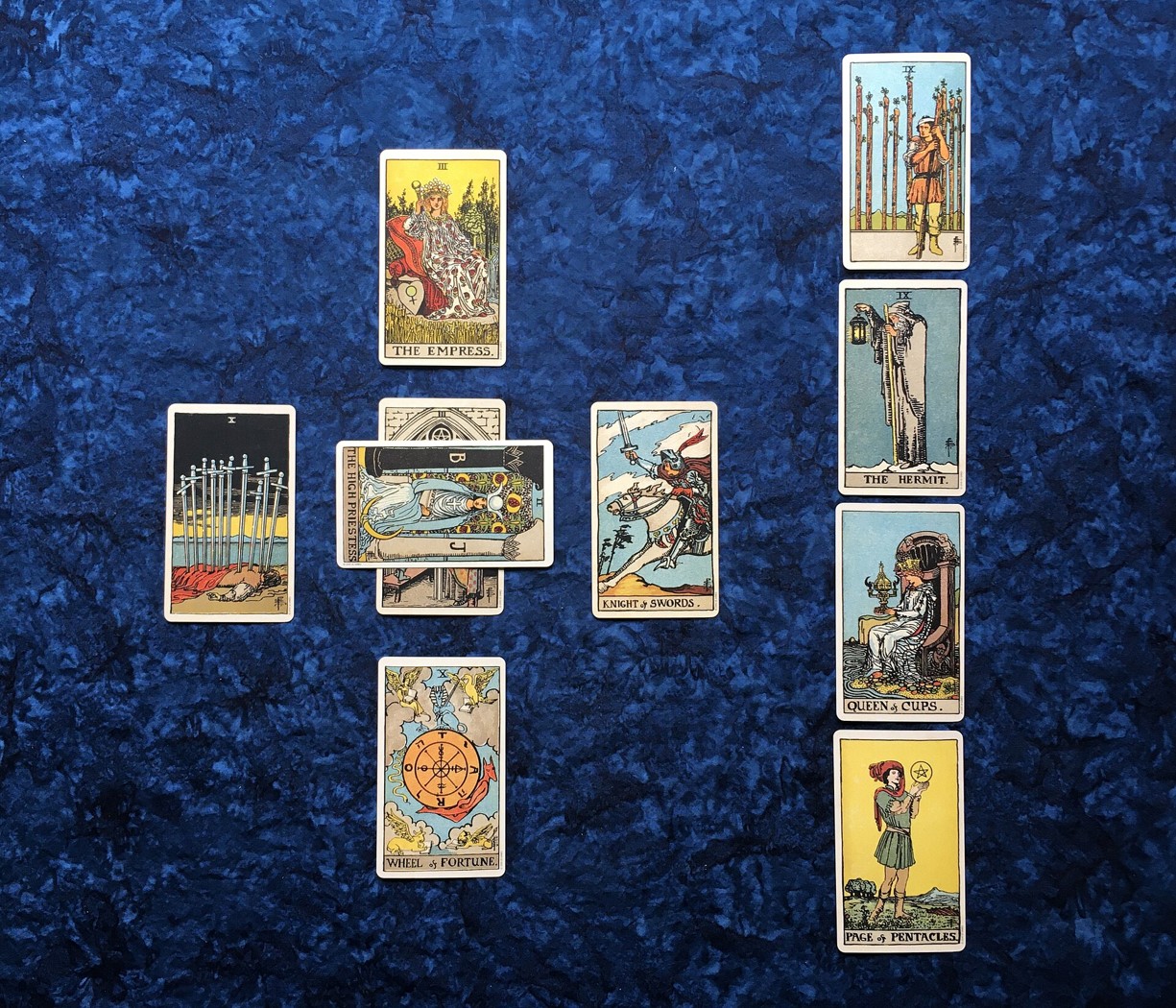
Representative real photograph of a tarot spread; not a reading performed for a client or the recurring-card sequence described in the article. Photo: Nosferattus; CC0. Display copy resized. Original photograph and rights record. License terms.

