A letter to your future self can be a spiritual keepsake without pretending you know who will read it. I feel the strongest version offers companionship across time: here is what matters to me now, here is what I hope you remember. It does not demand a particular relationship, job or achievement by the date on the envelope.
Choose a reopening point that feels ordinary and manageable, such as a season or a birthday. Treat that date as an invitation, not an appointment with destiny. You can use paper, a saved document or a simple note. The value is in the language you leave yourself, not the expense or ceremonial appearance of its container.
Describe the present honestly
Begin with a truthful snapshot of the present. Name something you enjoy, something you are learning and one question you cannot yet answer. Avoid writing as though the uncertainty has already been resolved. A later version of you may find comfort in knowing that your current life contained both genuine pleasure and unfinished business.
Next, describe a value through an example. Instead of “Be braver,” write about a time you spoke honestly despite discomfort. Instead of “Stay positive,” recall what helped you remain curious during a disappointing week. Concrete memories offer your future self something to recognize; broad commands may simply sound like another person assigning homework.
Give the future permission to differ
Leave room for a life that develops differently. You might write, “If this plan changed, I hope you can explain what you learned rather than punish yourself for changing it.” That sentence protects the exercise from becoming an audit. The letter is not a contract, and a different outcome need not turn its hopes into accusations.
Keep other people’s private information out of the keepsake when it is not needed. Describe your own uncertainty rather than preserving a detailed dossier about someone else. Store the letter somewhere you control, with a reminder if you want one. If sharing it would change what you can honestly write, leave the practice private.
Read for recognition, not a grade
When you reopen it, read for continuity and surprise rather than a score. You may agree, smile, grieve or decide the old advice no longer fits. All of those responses can belong. The gift is a record of someone who was trying to live thoughtfully with incomplete information. That person was you, not a prophet who failed a deadline.
Explore private readings with Melissa.
Photograph and attribution
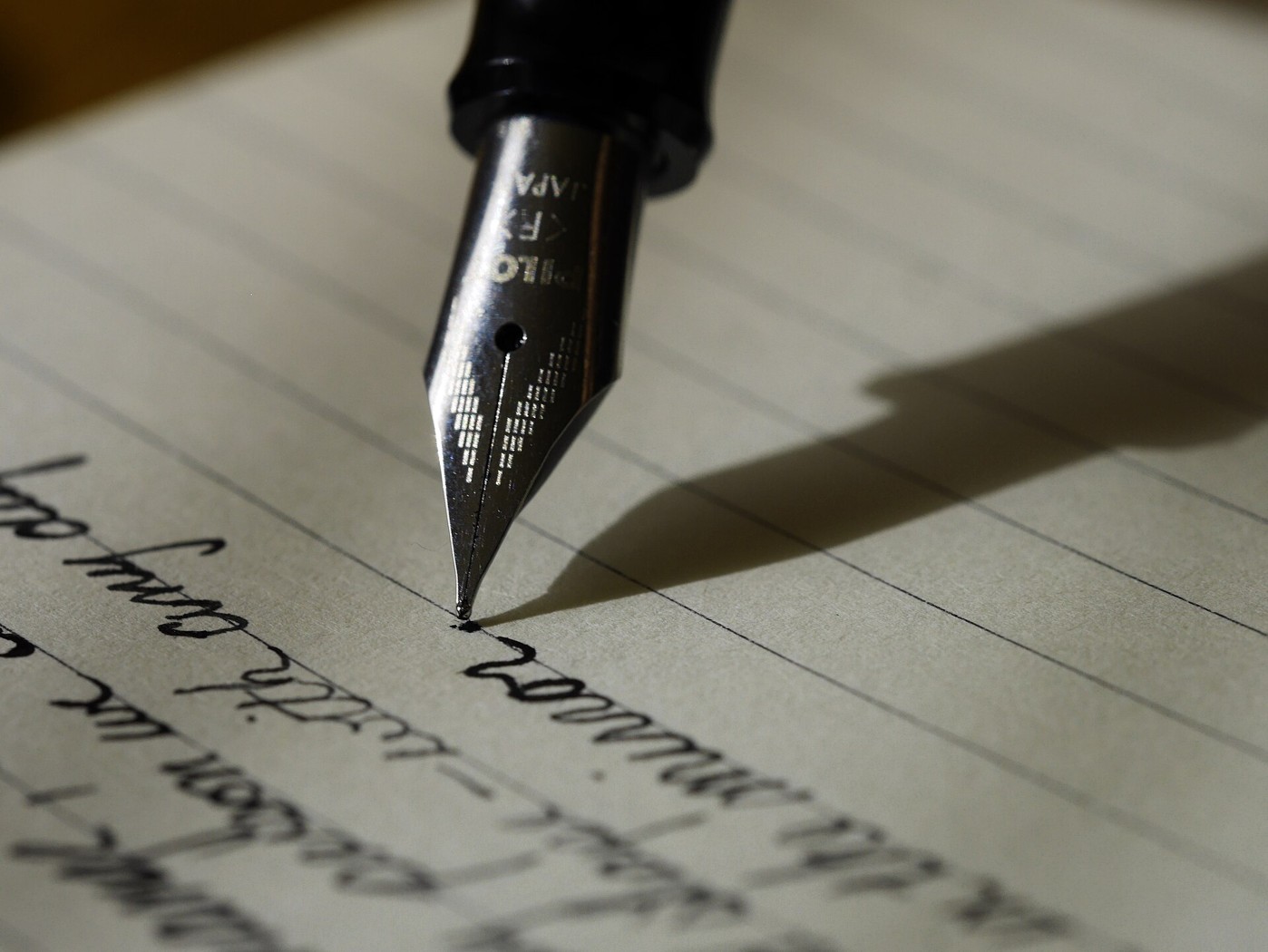
Representative real photograph of writing with a fountain pen for a future-self reflection; not a client letter, the author’s handwriting or a prediction. Photo: Aaron Burden aaronburden; CC0. Display copy resized. Original photograph and rights record. License terms.

