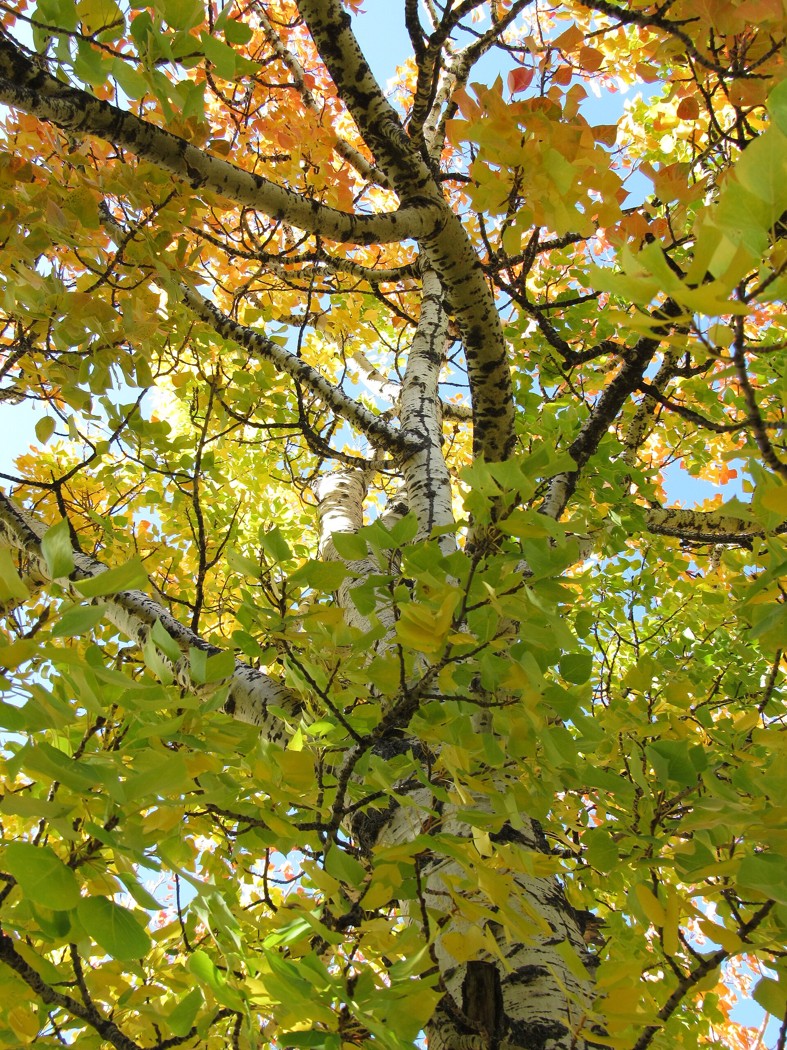
Sitting with a tree can be a spiritual practice without requiring the tree to tell you what to do. I feel there is something valuable in visiting a living place that does not need to become a symbol of your relationship, career or next decision. For a few minutes, the purpose can simply be to notice what is present beyond your own running commentary.
Choose a tree you can approach safely and lawfully, perhaps in a public park or a familiar garden. A view from a window is equally usable. You do not need an isolated forest, a rare species or physical contact with the bark. Stay on permitted paths, leave plants undisturbed and let access and comfort determine where you pause.
Describe before interpreting
Begin with three visible details: the angle of a branch, a patch of shade and a difference in leaf color. If you do not know the species, let that remain an ordinary gap in knowledge. You can look it up afterward. Observation does not become more spiritual when you invent an explanation for something you have not yet learned.
Next, notice movement without assigning it a verdict. Leaves turning in the wind are not proof that your plan has been approved. A broken branch is not a prediction of loss. You can have a personal association while recognizing it as your association. This distinction allows imagination to participate without turning a living landscape into an authority over your future.
Make the pause manageable
Stay for a comfortable interval, perhaps two or three minutes. If your mind returns to a worry, acknowledge the worry and bring your attention back to one visible feature. You do not need to empty your mind or force a feeling of connection. Some visits will feel ordinary. Ordinary attention is part of the practice, not evidence that you lack sensitivity.
Before leaving, consider one act of respect that belongs to the actual place. That might be taking your litter home, keeping clear of roots or learning which public group cares for the park. Avoid leaving crystals, candles, ribbons or offerings that could harm wildlife or create work for somebody else. Appreciation does not require adding an object to the landscape.
Return with curiosity
If you return another week, notice what has changed and what you overlooked before. Let familiarity deepen your attention rather than your certainty about hidden messages. The tree has a life beyond your visit. Recognizing that can be its own kind of spiritual perspective: you are part of a world that is not organized entirely around giving you an answer.
Explore private readings with Melissa.
Photograph and attribution
Real photograph of an aspen tree in sunlight, used to illustrate quiet attention to a living place; not a tree visited by a client. Photo: BethGwynne; CC BY-SA 4.0. Display copy resized. Original photograph and rights record. License terms.

