Rereading an old spiritual journal can bring back more than memories. You may encounter confident predictions, intense hopes or beliefs you no longer hold. It is tempting to judge the earlier version of yourself as foolish. I feel a more useful reading asks what you were trying to understand, and what information you did not yet have.
Choose a few pages rather than committing to the entire notebook. Keep the original wording intact for now. An old entry is a record of a moment, not an instruction that remains binding because you wrote it sincerely. You are allowed to have changed without rewriting every page to make your history look consistently wise.
Separate observation from interpretation
Use a separate sheet with three headings: what happened, what I felt and what I assumed. A message arriving belongs in the first column. Feeling relieved belongs in the second. Deciding that it guaranteed reconciliation belongs in the third. This distinction can be uncomfortable, but it shows you where experience ended and interpretation began.
Look for a skill that has developed since then. Perhaps you now ask a direct question instead of tracking coincidences, or recognize when you need more information. Name that change specifically. The purpose is not to replace shame with a grand claim that everything happened for a reason. It is to notice a capacity you can actually use today.
Choose how much to revisit
Some pages may still feel tender. You can stop, close the notebook or decide that a particular period does not need revisiting now. You do not have to turn private writing into public testimony, and you do not owe anyone a photograph of the entry. Keeping the exercise private can help you read more honestly.
If you want to add a present-day note, date it and write beside the earlier account rather than disguising it as part of the original. “I understand this differently now” preserves both perspectives. You might also record what remains uncertain. A revised understanding does not require replacing one absolute explanation with another.
Carry a skill forward
Finish with a sentence about what you want to carry forward: patience before interpretation, clearer questions or greater care with your own hopes. Then return the notebook to its place. Your earlier self was living without the benefit of the ending. Let the record teach you something without making that person your permanent defendant.
Explore private readings with Melissa.
Photograph and attribution
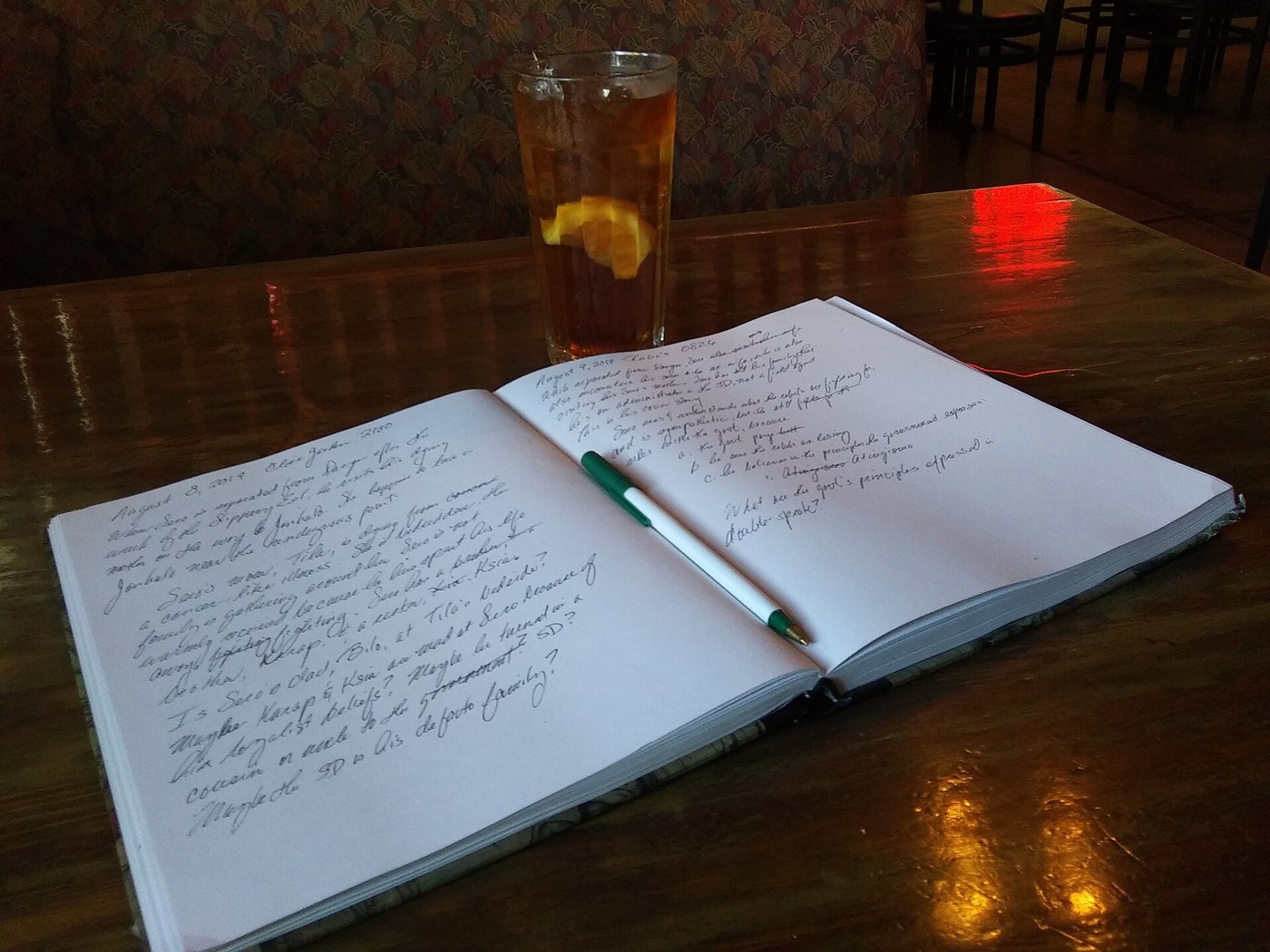
Representative photograph of a notebook and pen; not a client journal, client record or advisor notes. Photo: Phil Slattery; CC BY-SA 4.0. Display copy resized. Original photograph and rights record. License terms.

